

Stargram
Week of May 31
The power of the senses grows
In union with the gods’ creation,
And vigor of thought subsides
To a dreamlike drowsiness.
When godly being wills union with my soul,
Then, in quietness, must thinking accept
The state of dream.
[From Calendar of the Soul, May 26 – June 1]
Dear Friends,
The week begins with a remarkable Full Moon, during which the Sun (15° Taurus) and Moon (15° Scorpio) will illumine the oldest zodiacal axis known to ancient stargazers: the invisible thread that connects Aldebaran and Antares. These are two of the four ‘Royal Stars’, known to Zarathustra as ‘Guardians of Heaven’. From Cosmic Dances of the Zodiac:
[With] Taurus we begin our connection with the ‘Royal Way’, the higher path of Christ and initiation, entailing the work of transformation indicated by the naming of the ‘Four Holy Living Creatures’ by St. John in Revelation: the Bull, the Lion, the Eagle, and the Man or Angel.
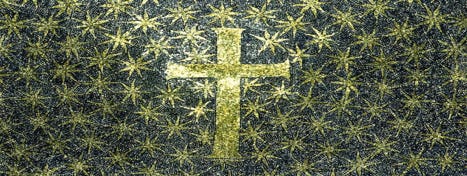
The ancient Persian astrologers recognized Aldebaran, marking the ‘eye of the Bull’ as one of the ‘Four Royal Stars’ which define the directional axis of heaven: Aldebaran (15° Taurus) in the east, together with Antares (15° Scorpio) in the west; Regulus (5° Leo) in the north and Fomalhaut (9° Aquarius) in the south. These four stars form a cross in the heavens, marking the four directions of space. The Four Royal Stars bear a rich lineage, for it was the great Persian teacher Zarathustra who first designated their royalty, calling them the ‘Four Guardians of Heaven’ or the ‘Watchers in the Four Directions’, with Aldebaran as the ‘Watcher in the East’, also called the ‘Eye of God’. [Lacquanna Paul and Robert Powell, p. 23]
Within this heavenly cross we encounter what Tomberg described as ‘divine instinct’, or ‘spontaneous obedience to God’.
Of course, other instincts have evolved since the serpent’s intervention in Eden. The Bull (St. Luke), the symbol of productive concentration, has devolved into the ‘bull’—signifying the concentration of the will on a single thing that renders us blind to everything else. Whereas the Lion (St. Mark) is known for moral courage, the ‘lion’ is merely ferocious. The Eagle (St. John) is the symbol for divine inspiration. At the same time, wrote Tomberg,
The eagle, as the prototype of the bird of prey, represents the instinct of aggression and lightning attack. [MOT, p. 257]
Finally, the Angel or Man (St. Matthew) represents the propensity to objectivity, or the instinct of conscience.
But there is objectivity and ‘objectivity’. One can be objective, i.e., impartial, in taking everything equally to heart. And one can be ‘objective’ (impartial) in assuming an attitude of equal indifference toward everything. The former is Angelic objectivity; the latter is its degeneration [i.e., cynicism]. [Ibid., pp. 257–58]
Adding to the importance of our Full Moon is its rarity: A Full Moon at this degree occurs only once in nineteen years. Such a Full Moon last took place in May of 2007, less than a month before the release of the first iPhone. Was May 2007 the last month of freedom in the modern age? The last month of anonymity?
Could we say further that the iPhone has succeeded in orienting our ‘horns’—our developing faculty of spiritual perception—downward, toward our devices?

On Thursday, as the Sun reaches 19°5ʹ Taurus (its degree at the healing of three blind boys), Mercury (9° Gemini) and Neptune (9° Pisces) will form the same square aspect that they did on the day of this miracle (10/May/31). Although there are numerous biblical accounts of Jesus restoring sight to the blind, Anne Catherine’s description (to my knowledge) cannot be found in the scriptures. However, the astonishing collective accuracy of her visions suggests that we receive this account with the seriousness with which it was conveyed to Clemens Brentano. The scene is Mallep, a town in Cyprus. The blind boys (between ten and twelve years of age) were playing their flutes:
Jesus asked them whether they desired to see the light, in order to walk diligently and piously in the path of righteousness. They answered most joyously: “Lord, do help us! Help us, Lord, and we will do whatever you command!” Then Jesus said: “Put down your instruments!” and he stood them before him. Jesus put his thumbs to his mouth and—placing them at the outer corners of the eyes of each boy in turn—moved them from the eyes to the temples above them. Then he took up a dish of fruit from the table, held it before the boys, and said: “Do you see that?” Then he blessed them and gave them the fruit. They stared around in joyful amazement. [Visions, vol. 2, p. 374]
In addition to bearing the potential to bring forth profound healing, the Mercury-Neptune square implies wakefulness before inspiration. The latter theme is strengthened by Mercury’s presence in Gemini, the zodiacal sign that endows our thinking with clarity. The open ‘channel’ of the Gemini glyph implies a free exchange between humanity and the cosmos—provided that we don’t cram our minds to capacity with temporal matters!
Jupiter might offer us some assistance, as it enters Cancer (its sign of exaltation) on Saturday: To become spirit permeated.
May we step upon the Royal Path together—that of productive concentration, moral courage, divine inspiration, and objectivity!
~ Julie H.